
T*R*O*P*E*S
Call the cops, the latest movie formula is audience abuse.

Once upon a time in Hollywood, movies were made under a strict formula. This was the legacy of the movie moguls — Jack Warner, Louis B. Mayer, Adolph Zukor, Samuel Goldwyn — who cultivated stars to populate pictures made on assembly lines according to their instincts and unbending devotion to the lowest common denominator. Oh, there were masterpieces — All Quiet on the Western Front, Stagecoach, Citizen Kane, Casablanca, The Third Man, Twelve Angry Men, Psycho, Sunset Boulevard, Singin’ in the Rain and many others — but the studio heads (and later production executives) were deities, and God is not necessarily averse to an outlier here and there. Like a two-headed goat and Citizen Kane.
But so protective were they of their own brands of genius, it took half a century for the accumulated wisdom to be codified when in 1979 the second-tier screenwriter Syd Field published Screenplay: The Foundations of Screenwriting. His prescribed structure was this:
a 30-page opening act filled with character introduction, backstory exposition and the plot’s central conflict. This set-up ends with a development that dramatically raises the stakes of the storyline, introducing a conflict or ambiguity that challenges the audience’s assumptions of the story’s trajectory.
a tense 60-page second act filled with physical and/or emotional peril leaving the audience anxious about the protagonist(s)’s fate. Then, here too, an unexpected twist that adds an entirely new dimension and portends doom.
a 30-page resolution, in which previously glossed over characters and/or plot points are revealed to be crucial and previous audience assumptions are undone until, with five pages remaining, triumph for the protagonist and comeuppance for the villain.
If all that sounds pat and artless, it should not. Carte blanche is not freedom; it is the prison of infinite and unnecessary choice. As the 16th century French philosopher Michel de Montaigne wrote, it is boundaries that liberate and enhance, analogizing that breath “forced through the narrow passage of a trumpet, comes out more forcible and shrill.” Which is why we don’t bemoan the sameness of Shakespeare’s 154 sonnets, each 14 lines of 10 syllables in iambic pentameter, each an astonishing and unique snowflake.
But I digress. Please note that between the Summer of Love and The Foundations of Screenwriting there was an interregnum. In the late 60s and 70s, independents and eventually studios themselves famously eschewed the paint-by-numbers ethos to embrace the counterculture. Midnight Cowboy, Easy Rider, Joe, Five Easy Pieces, The Deer Hunter, The Graduate, etc. were not the product of some cigar-chomping sultan. This was the heyday of the antihero and a hiatus for “happily ever after.” Which explains why history’s three greatest American films — The Godfather, The Godfather II and Dr. Strangelove (though completely devoid of hippies and marijuana) emphatically did not end with a hero riding into the sunset.
Eventually, of course, the sociological novelty of frayed bell bottoms and love beads gave way to the tyranny of box office. It can’t all be about oppression by The Man. Thankfully, Syd Field’s Code of Hammurabi was no relic. On the contrary, it miraculously endowed creators with the freedom to embrace structure without sacrificing ingenuity, artistry or character. If you ask me, the prototype for the cine-synergy was Atlantic City, Louis Malle’s portrait of the bedraggled old resort town and its human equivalent, Burt Lancaster, as an old racketeer clinging to the romantic days of yore. It was a darkly funny profile in pathos with not a hero to be found, but — waddaya know — a 30-page act one, 60-page act two and 30-page resolution with a denouement nobody saw coming. I won’t commit spoilage, but it was the anti-Midnight Cowboy.
By the 90s, the ostensibly conflicting values had fully coalesced, like entwined strands of DNA, to empower cinema’s Greatest Generation: Schindler’s List, Goodfellas, Rushmore, The Silence of the Lambs, The Remains of the Day, Fargo, Groundhog Day, Secrets and Lies, The Usual Suspects, Boogie Nights, O Brother, Where Art Thou?, My Cousin Vinny and Slingblade, to name but a few.
(I’d include Pulp Fiction, one of my top 10 American films ever, but it was, after all, Quentin Tarantino flipping a middle finger to Syd Field. Three acts in chronological order? Check this out, Syd.)
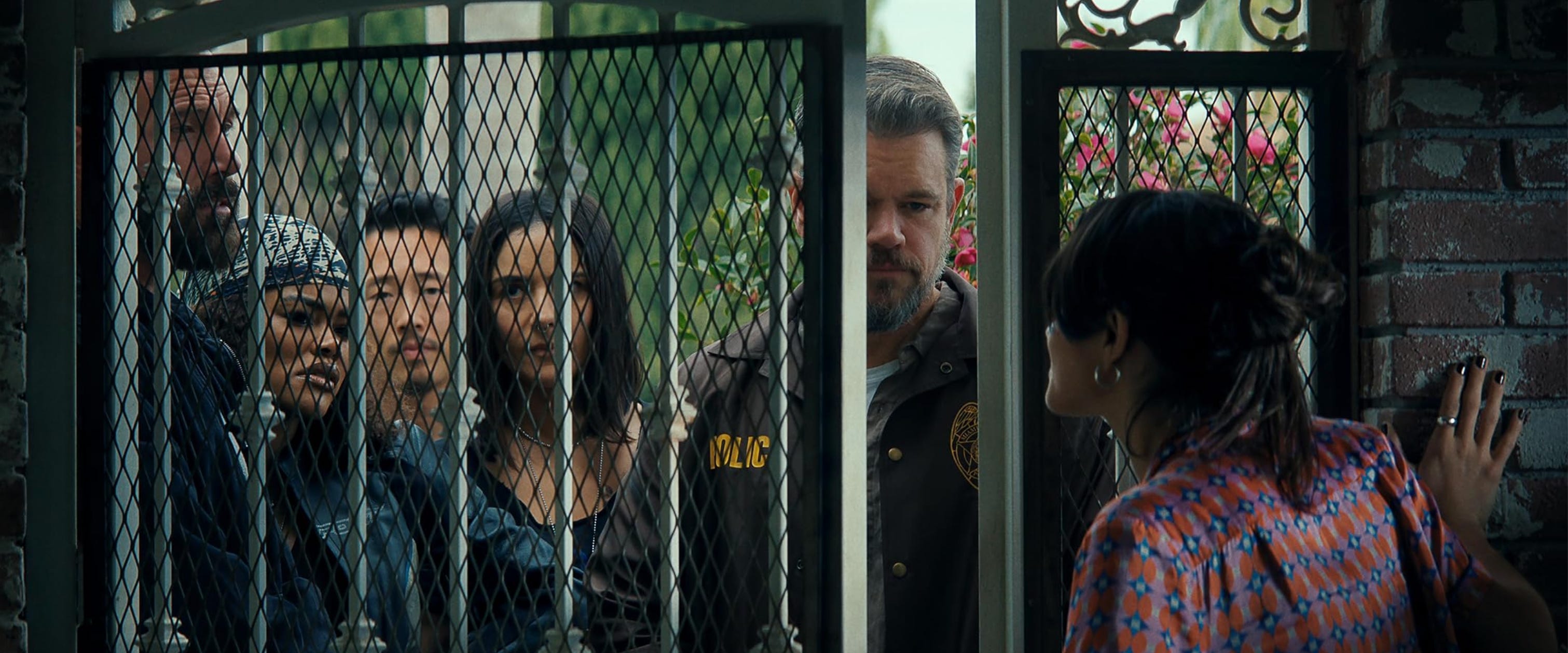
All right. What prompted this outburst of cinematic history? Here’s what. Last night I started to watch Matt Damon and Ben Affleck in the Netflix cop flick The Rip. I stayed with it for 15 minutes before moving on to something more rewarding, which happened to be the dishes. It was like Syd Field with Tourette’s.
Act 1 didn’t just identify the characters, the conflicts and the backstory. It did all those things 15 times. Constant repetition of names, the Miami police’s various special units and their controversies. It was a cognition test even Trump couldn’t ace. Me, I was equal parts bored, annoyed and exhausted.
That’s saying something, because every fan of the cops genre already must willingly suspend impatience. You start watching knowing the protagonist is estranged from his wife and constantly, because of the job, missing visitation with his child. You know he harbors personal demons he’s struggling to exorcise while working on the biggest case of his career. Most likely, he’s back in his old station after three years in the big city trying to redeem himself. He drinks in bars alone, and he wastes ammunition in return-fire episodes with both cop and robber safely crouched behind cars and bullets hitting nothing but windshields and fenders.
You know he’s under pressure from on high to make an arrest because “the media is having a field day,” but can’t get the wiretaps and surveillance he needs because the budgets have been cut back. You know he’s a maverick who antagonizes his superiors with his contempt for the rules, and at some point will have to surrender his gun and shield to the captain, then illegally work the case while suspended. You know he will enter a washroom, emotionally exhausted, and splash water on his face. And he’ll sit in his car on a stakeout all night pretending to sip shitty take-out coffee from an always-empty cup. Mostly you know that his beloved mentor is the dirty cop behind the death of his partner.
By the way, he wears sunglasses but never for more than the first six seconds of a scene.
What can I say? Such tropes are the price of admission. But The Rip is something else altogether. The endless reiteration was a thicket I simply didn’t want to hack through, and I couldn’t understand why. I assumed it was just careless writing or failure to hire a script supervisor, but no. In the digital world, it was the Revenge of Syd Field — a system informed not by smoke signals from Louis B. Mayer’s cigar, or Field’s observant synthesis of decades of hit-movie architecture, but of data. This I learned from Damon himself who went on a podcast and said the following about making movies for streaming platforms:
“The standard way to make an action movie that we learned was, you usually have three set pieces. One in the first act, one in the second, one in the third. You spend most of your money on that one in the third act. That’s your finale. And now [streamers] are like, ‘Can we get a big one in the first five minutes? We want people to stay. And it wouldn’t be terrible if you reiterated the plot three or four times in the dialogue because people are on their phones while they’re watching.’”
Noooooooooooo. This isn’t about going lowbrow to appeal to the maximum audience. It isn’t about standardizing a story arc because time has shown it to broadly resonate. It’s about cluttering up the movie to get through to the half-attentive, who wish to consume two or more digital products at once — thus penalizing the viewers most focused on what you’ve spent $50-$300 million to produce. Hell, screenwriters seldom even use perfunctory chitchat in their scripts — the “hellos” and “goodbyes” and other perfunctory phrases they disdain as “furniture” getting in the way of the story. The Rip is the IKEA showroom.
No doubt Netflix is guided by the data, but it’s hard to believe that time will reward this strategy. Especially now. We live in a world with ever-expanding indifference to making a sacrifice for the benefit of others — especially when the others are deemed not to be doing their part. About 100 million Americans don’t want to give the poorest Americans food subsidies, for fuck’s sake, and don’t want government and private employers to level the playing field for minority job candidates. Maybe they’re willing to tolerate annoying plot tropes and obviously empty coffee cups, but it’s hard to believe they’ll sacrifice coherent first acts for the Insta addict next door. In fact, there may be shootings.
All of which is to say, “Yo, Netflix. Be like Coca-Cola, not like Waffle House. Don’t fuck with the formula.” Because when you fuck with the formula, you’re fucking with me.
Great post! It's so sad that streaming platforms are squandering money and talent making "product" they KNOW is inferior, for an audience that isn't paying attention.
Adding to the problem is that most of the streaming platforms have introduced ad-supported options that mean their content has to be made in a way that will please advertisers as well as viewers -- to position suitable spots for ads, but mainly to avoid content advertisers might dislike.
You're been writing brilliantly about just this tension between art and commerce for years. Thank you for your service!
"Carte blanche is not freedom; it is the prison of infinite and unnecessary choice."
Or, as Devo sang: "Freedom of choice is what you've got -- freedom from choice is what you want."
Reminds me of wandering the aisles in a modern supermarket.
Excellent column. I'm not a big fan of "Boogie Nights," but its nearly thirty years since I saw the movie, and as the ancients warned - wagging their bony fingers - "De gusitbus non est disputandem."
I can't argue with that.